exhibitions
The exhibition Poets of the Body. Dance in the Edad de Plata is structured in four large areas corresponding to chronological criteria. The story begins at the turn of the 20th century in order to place the visitor in the cultural panorama in which the classical and academic dance of the Teatro Real and the Liceo overlapped with another type of scenic aspects, from the variedades (variety shows) to flamenco at the cafés cantantes (singing cafés). The arrival of the Ballets Russes of Diaglilev in 1916 in their first tour of Spain would become a changing point in the history of dance, serving as a collaborative model between dancers, men and women of letters, musicians and painters. The circulation of other foreign companies and the new proposals offered by Spanish creators and intellectuals meant the necessary wake-up call for a new kind of dance at the beginning of the Twenties. Despite the closing of the Teatro Real in 1925 and its negative effect on classical dance, which had to survive in other stages and academies, Antonia Mercé, ?la Argentina' (the Argentinian) premiered in Paris the ballet version of El amor brujo, written by Falla. This foreshadowed the ample perspectives that her future company would open towards the end of the decade. In the same way of her Ballets Espagnols, the premieres of Vicente Escudero, Teresina Boronat or Joan Magrinyá achieved success with the collaboration of poets, composers and visual artists.
Moreover, the showing shines the spotlight on the context of the Institución Libre de Enseñanza and the Residencia de Estudiantes. Modern dance was included in the academic programmes of both their male and female groups, whereas Spanish dance was present in activities and projects carried out by the circles of residents. The friendship between Federico García Lorca and Encarnación López ?la Argentinita' (the Little Argentinian), the representation of El amor brujo by the Compañía de Bailes Españoles, or the frustrated project of the premiere of Clavileño, conceived by Maruja Mallo and Rodolfo Halffter are some examples of the memory of those dances that inhabited the spaces of the Residencia. Lastly, the section dedicated to the legacy of the Silver Age after the Spanish Civil War becomes a sort of unfinished cartography of the paths followed by those protagonists both in exile and during the first part of the Francoist regime.
Sections:
1. A new dance / 2. The years of splendour / 3. The dance at the Residencia de Estudiantes: from Terpsichore to Telethusa / 4. A legacy after the Civil War
CATALOGUE
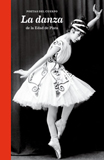
POETS OF THE BODY. DANCE IN THE EDAD DE PLATA
The exhibition Poets of the Body. Dance in the Edad de Plata is structured in four large areas corresponding to chronological criteria. The story begins at the turn of the 20th century in order to place the visitor in the cultural panorama in which the classical and academic dance of the Teatro Real and the Liceo overlapped with another type of scenic aspects, from the variedades (variety shows) to flamenco at the cafés cantantes (singing cafés). The arrival of the Ballets Russes of Diaglilev in 1916 in their first tour of Spain would become a changing point in the history of dance, serving as a collaborative model between dancers, men and women of letters, musicians and painters. The circulation of other foreign companies and the new proposals offered by Spanish creators and intellectuals meant the necessary wake-up call for a new kind of dance at the beginning of the Twenties. Despite the closing of the Teatro Real in 1925 and its negative effect on classical dance, which had to survive in other stages and academies, Antonia Mercé, ?la Argentina' (the Argentinian) premiered in Paris the ballet version of El amor brujo, written by Falla. This foreshadowed the ample perspectives that her future company would open towards the end of the decade. In the same way of her Ballets Espagnols, the premieres of Vicente Escudero, Teresina Boronat or Joan Magrinyá achieved success with the collaboration of poets, composers and visual artists.
Moreover, the showing shines the spotlight on the context of the Institución Libre de Enseñanza and the Residencia de Estudiantes. Modern dance was included in the academic programmes of both their male and female groups, whereas Spanish dance was present in activities and projects carried out by the circles of residents. The friendship between Federico García Lorca and Encarnación López ?la Argentinita' (the Little Argentinian), the representation of El amor brujo by the Compañía de Bailes Españoles, or the frustrated project of the premiere of Clavileño, conceived by Maruja Mallo and Rodolfo Halffter are some examples of the memory of those dances that inhabited the spaces of the Residencia. Lastly, the section dedicated to the legacy of the Silver Age after the Spanish Civil War becomes a sort of unfinished cartography of the paths followed by those protagonists both in exile and during the first part of the Francoist regime.
Sections:
1. A new dance / 2. The years of splendour / 3. The dance at the Residencia de Estudiantes: from Terpsichore to Telethusa / 4. A legacy after the Civil War
LOCATION AND DATES
RESIDENCIA DE ESTUDIANTES
October 6 2017 - 1 April 2018
RESIDENCIA DE ESTUDIANTES
October 6 2017 - 1 April 2018
WEBSITE
CATALOGUE
CREDITS
Curator
Idoia Murga Castro
Organized by
Asociación Cultural Española
Residencia de Estudiantes
Curator
Idoia Murga Castro
Organized by
Asociación Cultural Española
Residencia de Estudiantes