

exhibitions
The exhibition Laboratories of the New Education. On the Centenary of the Instituto-Escuela remembers one of the essential pieces of the modernisation project of the Spanish society promoted by the Institución Libre de Enseñanza through education, culture and science prior to 1936. The showing, organized by the Fundación Francisco Giner de los Ríos-Institución Libre de Enseñanza, Acción Cultural Española and the Residencia de Estudiantes, with the collaboration of the Ministerio de Educación y Formación Profesional and the participation of the Fundación Estudio, suggests how reflecting on that experience can help us face the challenges of our time.
The Instituto-Escuela (I-E) of Madrid, created in 1918 by the Junta para la Ampliación de Estudios e Investigaciones Científicas, carried out the most ambitious reformation project of public education in the pre-university stages that had been developed in our country until then. It became one of the most outstanding education centres in the interwar period. The I-E is the result of a project by the Institución Libre de Enseñanza from 1876 to modernize the culture and the Spanish society through education and science, and to place Spain at the level of the most advanced countries.
The I-E tested new plans and methods that could be applied generally to Spanish education, and it was also the centre in which the teachers of that new education were trained. Other public experimental centres created in the first third of the 20th century participated as well in this purpose, such as the Grupo Escolar Cervantes in Madrid or the I-Es in Barcelona, Sevilla, Valencia and Málaga.
Those "laboratories" resolved to educate critical and creative citizens who would be able to govern their personal and professional life. They also provided them with certain spaces, certain practices and certain methods that were developed until 1936 and were interrupted by the civil war, the Francoist dictatorship and the purging of most of the people who participated in that experience. Despite this, many were determined to preserve this legacy, that survived in different initiatives in the exile abroad or in the difficult conditions of the exile inside.
The goal of this exhibition is to make this crucial moment of transformation well-known, which is something that the Spanish society of the first decades of the 20th century was determined to achieve. Moreover, it will make it possible for the audience to reflect on the lessons that can be learned from that modernising project and applied to face the current challenges. Supporting education as an essential factor for progress and well-being of the contemporary societies is nowadays a well-spread concern. The exhibition shows the problems that the Instituto-Escuela project faced and the solutions it promoted, from the perspective of the current society and the necessity for change of our present-day education.
The first room of the exhibition offers the chronological story of the creation and development of these "laboratories of the new education" and their innovative proposals of education. The second room is thematically organized around four ideas: "an integral education", "a different school", "the student as a protagonist" and "a new teacher", and it presents the principles, methods, and practices of the new education in these four dimensions, as well as the dialogue that can be established with the innovative education in our days.
The exhibits (paintings, sculptures, documents, photographs, films of the time, letters, notebooks, books, magazines, manuscripts, etc.) come from several institutions as well as public and private education centres, apart from private collections. One of the most notable features of this exhibition is the abundant selection of photographs of the time that show in full swing what those projects were about. It does so through the buildings and classrooms where the lessons took place, the field trips and outings of the students, and the sports, workshops and other activities that they carried out. Together with the photographs, an attractive variety of scholarly materials is shown, such as the flashcards that the teachers prepared for their lessons or the workbooks made by the students throughout the year, several of whom would become relevant creators or scientists in the future.
Several audiovisual materials are displayed as well, some modern and some from that time, many of them created especially for the exhibition. A considerable collection of the plastic work of authors of modernity and of historical avant-garde is shown. Some of these are Regoyos, Picasso, Torres García, Barradas, Alberto Sánchez, Benjamín Palencia, Maruja Mallo, García Lorca, Bores, Alberti, Moreno Villa or Ángel Ferrant, who seek dialogue with current artists such as Darío Villalba, Eduardo Arroyo, Blanca Muñoz, Emilia Azcárate, Antonio Ballester or Chema Madoz.
CATALOGUE
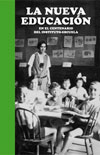
LABORATORIES OF THE NEW EDUCATION
On the centenary of the Instituto-Escuela
The exhibition Laboratories of the New Education. On the Centenary of the Instituto-Escuela remembers one of the essential pieces of the modernisation project of the Spanish society promoted by the Institución Libre de Enseñanza through education, culture and science prior to 1936. The showing, organized by the Fundación Francisco Giner de los Ríos-Institución Libre de Enseñanza, Acción Cultural Española and the Residencia de Estudiantes, with the collaboration of the Ministerio de Educación y Formación Profesional and the participation of the Fundación Estudio, suggests how reflecting on that experience can help us face the challenges of our time.
The Instituto-Escuela (I-E) of Madrid, created in 1918 by the Junta para la Ampliación de Estudios e Investigaciones Científicas, carried out the most ambitious reformation project of public education in the pre-university stages that had been developed in our country until then. It became one of the most outstanding education centres in the interwar period. The I-E is the result of a project by the Institución Libre de Enseñanza from 1876 to modernize the culture and the Spanish society through education and science, and to place Spain at the level of the most advanced countries.
The I-E tested new plans and methods that could be applied generally to Spanish education, and it was also the centre in which the teachers of that new education were trained. Other public experimental centres created in the first third of the 20th century participated as well in this purpose, such as the Grupo Escolar Cervantes in Madrid or the I-Es in Barcelona, Sevilla, Valencia and Málaga.
Those "laboratories" resolved to educate critical and creative citizens who would be able to govern their personal and professional life. They also provided them with certain spaces, certain practices and certain methods that were developed until 1936 and were interrupted by the civil war, the Francoist dictatorship and the purging of most of the people who participated in that experience. Despite this, many were determined to preserve this legacy, that survived in different initiatives in the exile abroad or in the difficult conditions of the exile inside.
The goal of this exhibition is to make this crucial moment of transformation well-known, which is something that the Spanish society of the first decades of the 20th century was determined to achieve. Moreover, it will make it possible for the audience to reflect on the lessons that can be learned from that modernising project and applied to face the current challenges. Supporting education as an essential factor for progress and well-being of the contemporary societies is nowadays a well-spread concern. The exhibition shows the problems that the Instituto-Escuela project faced and the solutions it promoted, from the perspective of the current society and the necessity for change of our present-day education.
The first room of the exhibition offers the chronological story of the creation and development of these "laboratories of the new education" and their innovative proposals of education. The second room is thematically organized around four ideas: "an integral education", "a different school", "the student as a protagonist" and "a new teacher", and it presents the principles, methods, and practices of the new education in these four dimensions, as well as the dialogue that can be established with the innovative education in our days.
The exhibits (paintings, sculptures, documents, photographs, films of the time, letters, notebooks, books, magazines, manuscripts, etc.) come from several institutions as well as public and private education centres, apart from private collections. One of the most notable features of this exhibition is the abundant selection of photographs of the time that show in full swing what those projects were about. It does so through the buildings and classrooms where the lessons took place, the field trips and outings of the students, and the sports, workshops and other activities that they carried out. Together with the photographs, an attractive variety of scholarly materials is shown, such as the flashcards that the teachers prepared for their lessons or the workbooks made by the students throughout the year, several of whom would become relevant creators or scientists in the future.
Several audiovisual materials are displayed as well, some modern and some from that time, many of them created especially for the exhibition. A considerable collection of the plastic work of authors of modernity and of historical avant-garde is shown. Some of these are Regoyos, Picasso, Torres García, Barradas, Alberto Sánchez, Benjamín Palencia, Maruja Mallo, García Lorca, Bores, Alberti, Moreno Villa or Ángel Ferrant, who seek dialogue with current artists such as Darío Villalba, Eduardo Arroyo, Blanca Muñoz, Emilia Azcárate, Antonio Ballester or Chema Madoz.
LOCATION AND DATES
INSTITUCIÓN LIBRE DE ENSEÑANZA
From October 10, 2019 - July 26, 2020
INSTITUCIÓN LIBRE DE ENSEÑANZA
From October 10, 2019 - July 26, 2020
WEBSITE
CATALOGUE
CREDITS
Organized by
Fundación Francisco Giner de los Ríos- Institución Libre de Enseñanza
Residencia de Estudiantes
Acción Cultural Española (AC/E)
With the collaboration of
Ministerio dee Educación y Formación Profesional
And the participation of
Fundación Estudio
Curators
Antonio Moreno
Eugenio Otero
María del Mar del Pozo
Carlos Wert
Organized by
Fundación Francisco Giner de los Ríos- Institución Libre de Enseñanza
Residencia de Estudiantes
Acción Cultural Española (AC/E)
With the collaboration of
Ministerio dee Educación y Formación Profesional
And the participation of
Fundación Estudio
Curators
Antonio Moreno
Eugenio Otero
María del Mar del Pozo
Carlos Wert